
Women’s Wear in 1950s Fashion
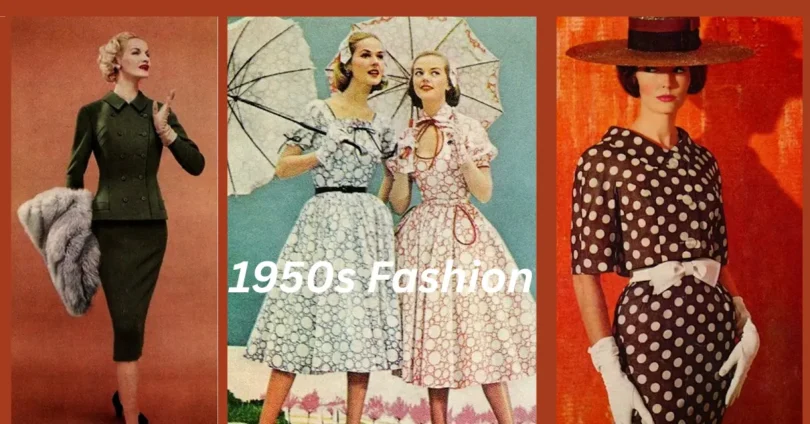
Women’s fashion in the 1950s was defined by elegance, femininity, and structure. After the rationing of World War II ended, clothing production flourished, and women embraced styles that celebrated shape and sophistication. The hallmark of the decade was Christian Dior’s “New Look,” with its cinched waist and full skirt, setting the tone for much of the era’s style.
Key Silhouettes
- Full-Skirted Dresses: Calf-length, voluminous skirts paired with fitted bodices created the iconic hourglass figure.
- Pencil Skirts: Sleek, narrow skirts offered a more tailored option for work or daytime wear.
- Tea-Length Hemlines: Perfect for day dresses, these lengths balanced practicality and charm.
Fabrics and Colors
Cotton, taffeta, wool, and new synthetic fabrics like nylon became common. Pastel shades such as mint, baby pink, and pale blue dominated, though bold prints — florals, polka dots, and checks — added playful energy.
Accessories
Women in the 1950s rarely left the house without accessories. Gloves, pearl necklaces, handbags, and cat-eye sunglasses completed the polished look, while stiletto heels and ballet flats defined footwear choices.
Everyday vs. Evening Wear
Daytime outfits were practical yet chic: sweater sets with skirts, shirtwaist dresses, and smart coats. Evening wear brought out glamour, with cocktail dresses, off-the-shoulder gowns, and statement jewelry.
Fashion Icon: James Dean
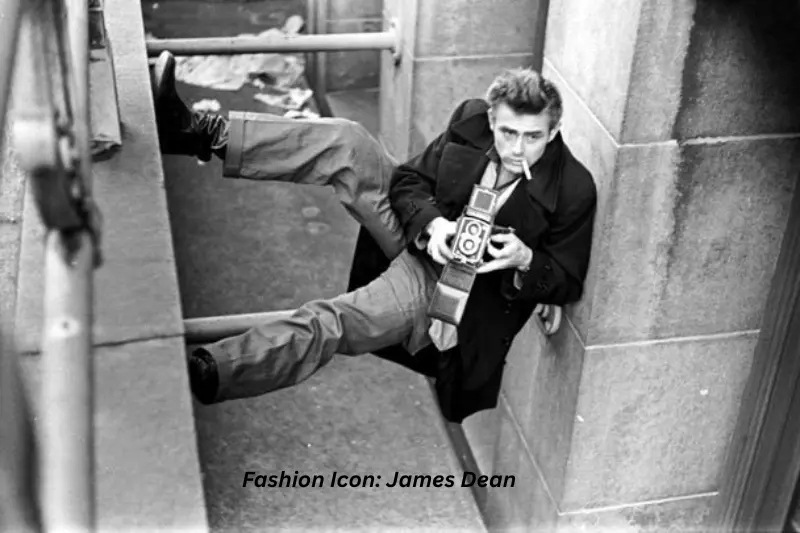
No discussion of 1950s fashion is complete without mentioning James Dean. The Hollywood actor wasn’t just a star of films like Rebel Without a Cause — he became a cultural symbol of youthful rebellion and effortless cool. His style defined a new wave of menswear that rejected stiff formality in favor of casual attitude.
Signature Looks
- White T-Shirt & Jeans: Dean’s plain crew-neck tee tucked into cuffed blue jeans became the ultimate uniform of 1950s youth. It was simple, affordable, and rebellious.
- Leather Jackets: Paired with his denim, a worn-in leather biker jacket gave Dean’s outfits a rugged, rebellious edge.
- Casual Footwear: Instead of dress shoes, Dean often wore boots or simple sneakers, breaking the formal menswear mold.
Impact on 1950s Fashion
James Dean’s style marked a turning point in menswear. It inspired teenagers to abandon the traditional suit-and-tie look in favor of casual, mix-and-match pieces. His wardrobe showed that attitude and confidence could be just as stylish as tailored suits.
Legacy Today
More than sixty years later, James Dean’s style remains timeless. The white tee, leather jacket, and jeans combination is still a go-to for anyone wanting an effortlessly cool, vintage-inspired outfit.
Menswear in 1950s Fashion
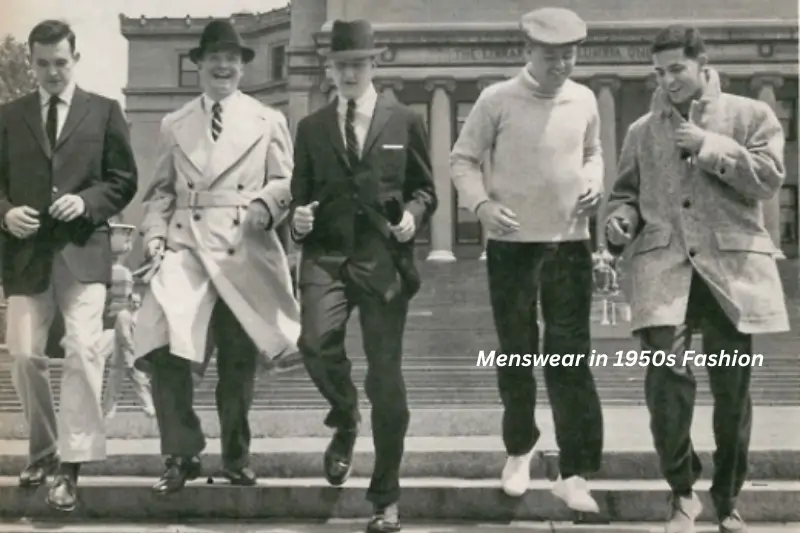
While women’s style in the 1950s was defined by glamour, men’s fashion blended tradition with a new sense of relaxed cool. The end of the war brought a return to classic tailoring, but the rise of youth culture and icons like James Dean and Elvis Presley introduced a more casual, rebellious edge.
Classic Men’s Style
- Business Suits: Slim-cut suits with narrow lapels and muted tones (charcoal, navy, brown) were everyday staples for working men.
- Shirts and Ties: Crisp white shirts paired with skinny ties or bow ties gave a clean, polished look.
- Hats and Accessories: Fedoras, pocket squares, and cufflinks remained marks of sophistication.
Casual and Youth-Driven Styles
- Denim & White Tees: Made famous by James Dean, this combination became the uniform of the younger generation.
- Leather & Letterman Jackets: Biker jackets and varsity-style jackets captured the rebellious spirit of rock ‘n’ roll.
- Casual Shoes: Loafers, penny loafers, and simple sneakers replaced formal dress shoes for off-duty wear.
Fabrics and Patterns
Wool, tweed, and flannel dominated the suiting world, while cotton and denim were go-tos for casual wear. Checks, pinstripes, and muted plaids added subtle character to jackets and trousers.
The Overall Look
Menswear of the 1950s managed to be both neat and approachable. Sharp suits coexisted with rugged denim, giving men options for both professional and leisure life. This mix of formality and casual style paved the way for the modern men’s wardrobe.
Children’s Wear in 1950s Fashion
Children’s clothing in the 1950s reflected the same polished aesthetic seen in adult wardrobes, but with a playful and practical twist. After years of wartime shortages, parents could finally afford to dress their kids in stylish, ready-made garments that balanced comfort and formality.
Everyday Outfits
- For Girls: Pinafores, pleated skirts, and simple blouses were common for school and play. Dresses often featured bright prints like gingham, polka dots, or florals. Cardigans or boleros added a layer of warmth.
- For Boys: Short trousers or cuffed jeans paired with button-down shirts and suspenders were typical. Sweaters and letterman-style jackets became popular as sports culture grew.
Dressy Occasions
Children were often dressed as “mini-adults” for formal events. Girls wore frilly party dresses with petticoats, lace socks, and Mary Jane shoes, while boys donned suits or blazers with neatly combed hair for Sunday best.
Footwear
Saddle shoes, buckle shoes, and sturdy leather boots dominated. Practicality was key, but parents still chose polished styles for public outings.
Fabrics and Colors
Durable cotton, wool, and corduroy were staples, while pastel shades and cheerful patterns kept children’s clothing lively and age-appropriate.
The Look Overall
1950s children’s wear balanced neatness with playfulness. It mirrored the adult trends of the time but emphasized durability and comfort to suit active young lives.
References
Victoria and Albert Museum (V&A). “Fashion in the 1950s.” https://www.vam.ac.uk/articles/fashion-in-the-1950s
- Smithsonian Magazine. “1950s Fashion History.”
- Dior Official Website. “The New Look: Christian Dior 1947.”
- Fashion History Timeline (Fashion Institute of Technology). “1950–1959 Fashion.”
- The Vintage Fashion Guild. “A Guide to 1950s Clothing Styles.”
Historical Context of 1950s Fashion
The 1950s marked a dramatic shift in how people dressed, largely shaped by the events of the previous decade. After years of wartime austerity and fabric rationing, the post–World War II boom brought prosperity, mass production, and new consumer culture. This economic growth gave people access to more clothing options than ever before.
In 1947, Christian Dior’s revolutionary “New Look” set the tone for early 1950s women’s fashion — a sharp contrast to the boxy, utilitarian styles of the 1940s. Meanwhile, advances in textile manufacturing introduced new synthetic fabrics like nylon, rayon, and taffeta, which were affordable and easy to care for. Department stores flourished, making stylish clothing available to the middle class, not just the wealthy.
At the same time, a youth culture emerged. Teenagers — a newly defined demographic — began developing their own styles, influenced by rock ’n’ roll, film stars, and an expanding sense of independence. This generational shift created the roots of modern streetwear and casual dressing.
Overall, the 1950s were a time when optimism, prosperity, and innovation shaped what people wore, resulting in one of the most iconic and influential decades in fashion history.
Primary / Period Sources
If you want to go straight to the source and see what people were really wearing in the 1950s, here are some authentic period materials:
- Original Fashion Magazines – Vogue, Harper’s Bazaar, Life, and Seventeen issues from 1950–1959 feature advertisements, photographs, and editorials showing contemporary styles.
- Sears, Montgomery Ward & J.C. Penney Catalogues – Mid-century department store catalogues provide a clear picture of everyday clothing and prices. Many are digitized on archive.org.
- Film and Television – Movies like Rebel Without a Cause (1955) or Gentlemen Prefer Blondes (1953) and TV shows like I Love Lucy captured what Americans were actually wearing.
- Museum Collections – The Victoria and Albert Museum, The Met Costume Institute, and regional history museums hold original garments, accessories, and textile samples from the decade.
- Advertising & Pattern Books – Vintage sewing patterns (Butterick, McCall’s, Simplicity) and department store ads illustrate how trends were marketed to home sewers.
Looking at these primary sources alongside secondary histories gives the most accurate picture of how 1950s fashion looked, felt, and evolved.
Frequently Asked Questions (FAQs) About 1950s Fashion
1. What defined women’s fashion in the 1950s?
Women’s fashion revolved around hourglass silhouettes inspired by Dior’s “New Look.” Full skirts, cinched waists, pastel colors, and polished accessories like gloves and pearls created a feminine yet sophisticated look.
2. How did men dress in the 1950s?
Men typically wore slim-cut suits with narrow ties for work and more relaxed outfits off duty. Jeans, white T-shirts, and leather jackets — made famous by James Dean — became symbols of youthful rebellion.
3. What fabrics were popular during the 1950s?
Traditional fabrics like cotton, wool, and silk remained staples, but new synthetics such as nylon, rayon, and taffeta gained popularity because they were affordable and easy to care for.
4. What did teenagers wear in the 1950s?
Teen fashion became its own movement. Girls often wore poodle skirts, saddle shoes, and sweaters, while boys favored denim jeans, T-shirts, and varsity jackets inspired by rock ’n’ roll culture.
5. Where can I find authentic 1950s clothing today?
You can browse vintage shops, estate sales, thrift stores, and online marketplaces like Etsy or eBay. Museums and archives also showcase original 1950s garments for reference.
6. How can I recreate a 1950s look today?
Start with a classic piece — a full midi skirt for women or cuffed jeans with a plain white T-shirt for men — and add retro accessories like cat-eye sunglasses, scarves, or loafers to complete the vintage vibe.
Conclusion
The 1950s remain one of the most iconic and influential decades in fashion history. From Dior’s dramatic “New Look” to James Dean’s effortless rebel style, clothing in this era reflected optimism, innovation, and a new spirit of self-expression after the austerity of wartime. Women embraced elegant silhouettes and vibrant prints, men balanced sharp tailoring with casual cool, and children dressed in playful yet polished styles.
Many of today’s trends — full skirts, skinny ties, vintage denim, and rock ’n’ roll jackets — trace their roots back to the 1950s. By looking at historical context and primary sources, it’s clear why this decade continues to inspire designers, stylists, and vintage lovers alike. Whether you’re building a retro-inspired wardrobe or just curious about fashion history, the 1950s offer a timeless blueprint for style.