
| Section Heading | What It Covers |
|---|---|
| Introduction | Explains what a Chicago style bibliography is, why it matters for academic writing, and previews formatting, examples, footnotes, and endnotes. |
| What Is a Chicago Style Bibliography? | Defines a Chicago style bibliography and explains its purpose in both the Notes & Bibliography and Author–Date systems. |
| Two Systems in Chicago Style | Describes the Notes and Bibliography system versus the Author–Date system and when to use each. |
| Formatting a Chicago Style Bibliography | Lays out general rules like alphabetical order, hanging indents, double spacing, and title formatting. |
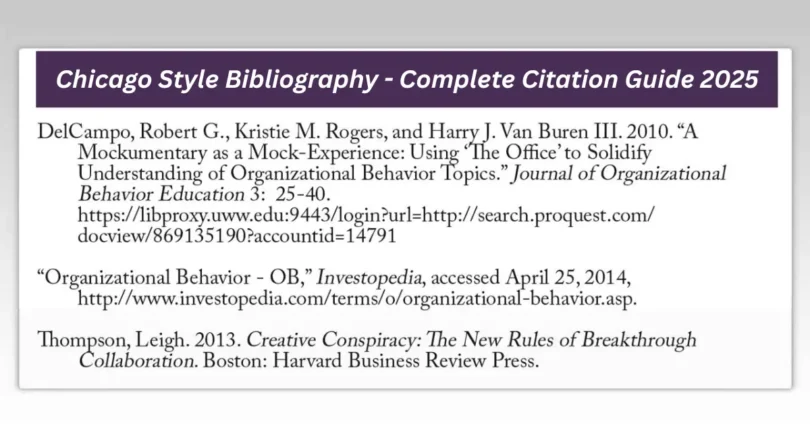
| Examples of Chicago Style Bibliography Entries | Shows sample entries for books, journal articles, and websites following Chicago style citation rules. |
| Common Mistakes to Avoid | Lists frequent errors such as inconsistent punctuation, missing data, and improper italics. |
| Tools & Resources | Suggests citation generators, the official Chicago Manual of Style Online, and reference managers like Zotero or EndNote. |
| Conclusion | Recaps why a Chicago style bibliography is important and how to apply the guide confidently. |
| FAQ | Provides answers to 7 common questions about Chicago style citation, footnotes, endnotes, and formatting. |
Introduction
A Chicago style bibliography is an essential component of research papers, theses, and other scholarly works written according to the Chicago Manual of Style. It provides a complete list of all the sources you consulted while writing, allowing readers to verify your evidence and explore your references. Unlike simple in-text citations, a well-structured bibliography presents full publication details in a consistent format, making your work look professional and credible.
In academic writing, following a recognized citation guide such as Chicago style is crucial. It ensures that you give proper credit to original authors, avoid plagiarism, and maintain clarity for your audience. Chicago style offers two systems—the Notes and Bibliography system and the Author-Date system—each with its own way of handling citations, footnotes, and endnotes.
This guide will walk you through how to format a Chicago style bibliography, provide clear examples for different types of sources, and highlight common mistakes to avoid so you can cite with confidence.
What Is a Chicago Style Bibliography?
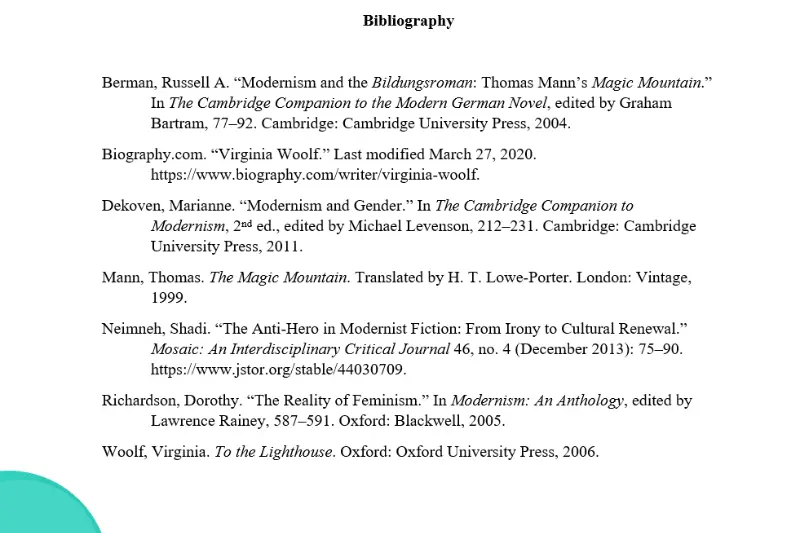
A Chicago style bibliography is the detailed list of sources that appears at the end of a paper written according to the Chicago Manual of Style. It includes all books, journal articles, websites, and other materials you consulted or cited in your research. Each entry provides full publication details so that readers can easily locate the original work.
In the Notes and Bibliography system, the bibliography complements your footnotes or endnotes by offering complete source information in one place. In the Author–Date system, it serves as the reference list that corresponds to your in-text citations. While the two systems differ slightly in format, both require careful attention to author names, titles, and publication data.
Creating a well-organized bibliography not only strengthens the credibility of your writing but also makes it easier for your audience to evaluate and follow your sources. In short, a Chicago style bibliography is your project’s roadmap for readers and reviewers alike.
Two Systems in Chicago Style
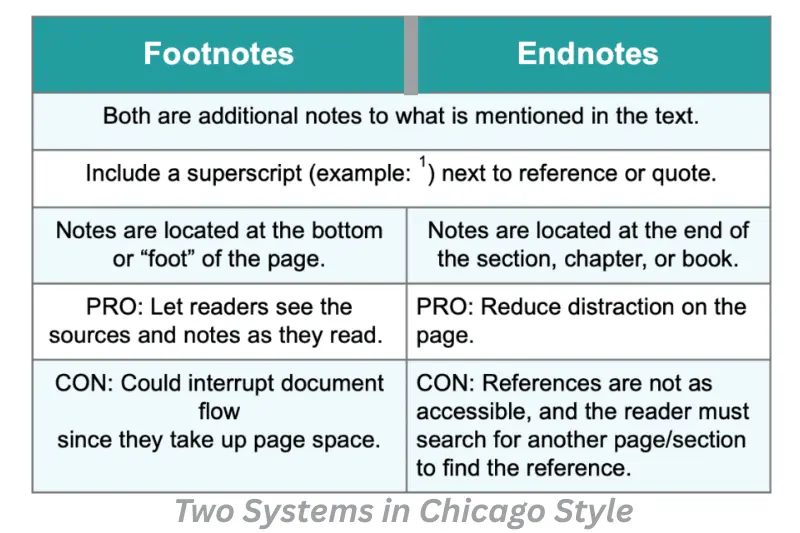
The Chicago Manual of Style provides two main systems for citing sources: the Notes and Bibliography system and the Author–Date system. Each one organizes citations differently, but both end with a comprehensive Chicago style bibliography that lists every source you’ve used.
- Notes and Bibliography System:
This approach is widely used in the humanities, such as history, literature, and the arts. Sources are cited with footnotes or endnotes, which give detailed information about each reference. The bibliography at the end of the paper then lists all sources alphabetically with full publication details. - Author–Date System:
This method is common in the social and natural sciences. It places a brief parenthetical citation in the text (author’s last name and year) and provides complete information in a reference list at the end.
Choosing the right system depends on your discipline or your instructor’s guidelines, but both require accurate formatting and consistency in your citation guide.
Formatting a Chicago Style Bibliography
A Chicago style bibliography must follow clear, consistent formatting rules to ensure it meets the standards of the Chicago Manual of Style. Regardless of whether you use the Notes and Bibliography system or the Author–Date system, the bibliography (or reference list) appears at the end of your paper on a new page titled “Bibliography” or “References.”
Each entry should:
- Be arranged in alphabetical order by the author’s last name.
- Use a hanging indent (the first line flush left, subsequent lines indented).
- Be double-spaced throughout.
- Include full publication details such as author, title, publisher, and date.
In the Notes and Bibliography system, titles of books and journals are italicized, while article titles appear in quotation marks. For the Author–Date system, the format is slightly different but still follows the same basic principles.
Following these Chicago style formatting rules not only makes your bibliography look professional but also helps your readers easily navigate and verify your sources.
Examples of Chicago Style Bibliography Entries
Seeing real examples makes it easier to apply the Chicago style citation rules correctly. Below are sample entries for common source types following the Notes and Bibliography system. (In the Author–Date system, the elements are similar but appear in a slightly different order.)
Book
Last Name, First Name. Title of Book: Subtitle. Place of Publication: Publisher, Year.
Example : Smith, John. The History of Chicago. Chicago: Windy Press, 2020.
Journal Article
Last Name, First Name. “Title of Article.” Title of Journal Volume Number, no. Issue Number (Year): Page Range.
Example: Lee, Anna. “Urban Planning in the Midwest.” Journal of American History 45, no. 2 (2019): 150–172.
Website
Last Name, First Name. “Title of Webpage.” Website Name. Last modified Month Day, Year. URL.
Example: Brown, Mark. “Chicago’s Architectural Heritage.” Chicago History Online. Last modified July 15, 2021. https://www.chicagohistory.org/heritage
.
Each of these entries follows the Chicago Manual of Style guidelines and can be adapted for footnotes or endnotes depending on the system you’re using.
Common Mistakes to Avoid
Even when following the Chicago Manual of Style, small errors in your bibliography can undermine the professionalism of your work. Here are some of the most common mistakes to watch for:
- Inconsistent punctuation – Mixing periods and commas incorrectly between entries can break the uniform look of your Chicago style citation list.
- Incorrect author order – Always list authors by last name first in the bibliography; only footnotes or endnotes show first name first.
- Missing page ranges or publication data – Double-check that each entry includes complete information (publisher, year, volume, issue, and pages where applicable).
- Improper italics or quotation marks – In the Notes and Bibliography system, book and journal titles must be italicized; article or chapter titles belong in quotation marks.
- Forgetting the hanging indent – Each entry should have the first line flush left and subsequent lines indented for clarity.
Avoiding these errors helps your Chicago style bibliography look polished and ensures that readers can reliably locate your sources.
Tools And Resources
Creating a Chicago style bibliography can feel overwhelming, but there are plenty of tools and resources to make the process easier and more accurate.
- Citation Generators: Online tools like Citation Machine, Zotero, or EasyBib can automatically format sources in Chicago style citation. Just double-check the output for accuracy.
- Official Chicago Manual of Style Online: The publisher offers an up-to-date digital version of the Chicago Manual of Style, including examples for books, journal articles, websites, and more.
- University Libraries & Writing Centers: Many universities provide their own citation guides with sample footnotes, endnotes, and bibliographies tailored to Chicago style.
- Reference Management Software: Programs such as Mendeley or EndNote can store all your sources and export them in different citation styles, including Chicago.
Using these tools can save time, reduce mistakes, and ensure your bibliography aligns perfectly with Chicago formatting standards.
Frequently Asked Questions (FAQ)
What is the difference between a Chicago style bibliography and a reference list?
In the Notes and Bibliography system, you use footnotes or endnotes and a bibliography. In the Author–Date system, your “reference list” functions like a bibliography but matches in-text citations.
Do I need both footnotes and a bibliography in Chicago style?
Yes, if you’re using the Notes and Bibliography system. Footnotes (or endnotes) give detailed information for each citation, while the bibliography lists all sources in one place.
How do I cite a website in Chicago style?
Include the author (if available), “title of the webpage,” website name, last modified or access date, and the full URL.
Is Chicago style the same as Turabian style?
Turabian style is a student-friendly version of the Chicago Manual of Style, but the core rules are essentially the same.
What font and spacing should I use for a Chicago style bibliography?
Use a readable font like Times New Roman 12 pt, double-space the entries, and apply a hanging indent for each entry.
How should multiple authors be listed in a bibliography entry?
List up to ten authors by last name first, separated by commas. For more than ten, list the first seven followed by “et al.”
Can I use citation generators for Chicago style?
Yes, tools like Zotero or EasyBib can help, but always review the output against the official Chicago citation guide for accuracy.
Conclusion
A well-prepared Chicago style bibliography is more than just a formality — it’s a vital part of presenting credible, organized academic work. By following the Chicago Manual of Style rules for formatting, citing sources, and organizing entries, you help your readers verify your research and build trust in your writing.
Whether you’re using the Notes and Bibliography system or the Author–Date system, the key is consistency: pay attention to details like punctuation, italics, and hanging indents. With the formatting tips, examples, and tools provided in this citation guide, you can create clear, accurate footnotes, endnotes, and bibliographic entries with confidence.
Taking the time to master proper Chicago style citation practices will not only improve your grades or publication chances but also enhance the overall professionalism of your work.