
Introduction
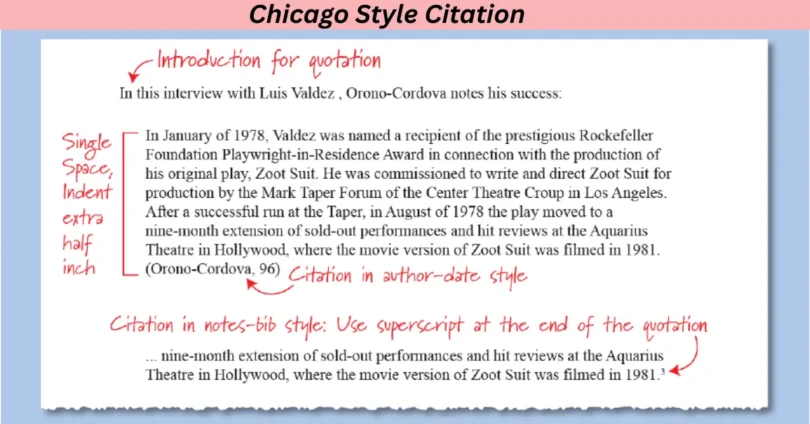
Citing your sources correctly is one of the most important parts of academic and professional writing. Whether you’re preparing a history paper, a research report, or a thesis, the way you give credit to other authors affects your credibility and prevents plagiarism. One of the most widely used systems in universities and publishing houses is the Chicago style citation.
Developed by the University of Chicago Press, this style offers two main approaches — Notes and Bibliography or Author-Date — making it flexible for both humanities and sciences. In this guide, you’ll learn what Chicago style citation is, why it matters, and how to format your references step by step.
What Is Chicago Style Citation?
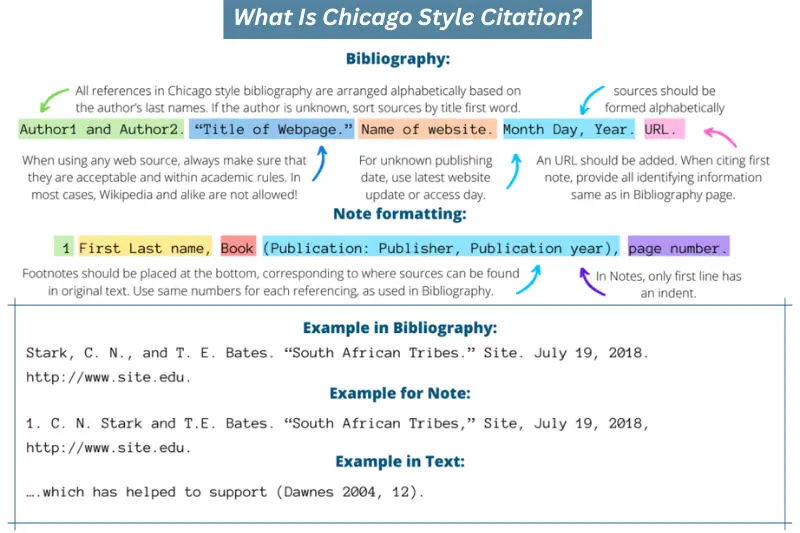
The Chicago style citation is a referencing system created by the Chicago Manual of Style (CMS), first published by the University of Chicago Press. It’s one of the most respected style guides for academic and professional writing, covering everything from punctuation and grammar to how you cite books, articles, and websites.
What makes Chicago style unique is that it offers two different citation systems, allowing writers to choose the one that best fits their field or assignment:
- Notes and Bibliography: Often used in the humanities, such as history, literature, and the arts. It relies on numbered footnotes or endnotes to cite sources, paired with a bibliography at the end of the document.
- Author-Date: Common in the sciences and social sciences. This system uses brief in-text citations with the author’s last name and publication year, plus a reference list at the end.
This flexibility allows the Chicago style to be widely applicable — from academic essays to professional publications.
Two Systems of Chicago Style Citation
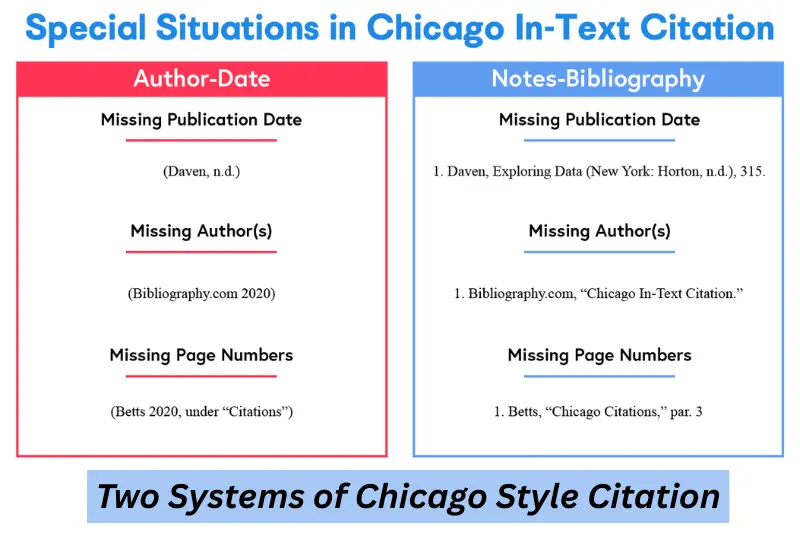
The Chicago Manual of Style offers two distinct ways to cite sources. Your choice depends on your discipline, your instructor’s preference, or your publisher’s guidelines.
1. Notes and Bibliography System
- Who uses it: Common in the humanities—history, literature, philosophy, and the arts.
- How it works: You insert a superscript number in your text. That number refers to a footnote at the bottom of the page or an endnote at the end of the chapter/article. You then list all your sources again in a full bibliography at the end.
Example in text:
- …as shown in recent research.^1
Example footnote:
- John Smith, The History of Chicago (New York: Academic Press, 2020), 45.
Example in bibliography:
- Smith, John. The History of Chicago. New York: Academic Press, 2020.
2. Author-Date System
- Who uses it: Common in the sciences and social sciences.
- How it works: You place a short citation directly in parentheses in the text, including the author’s last name, publication year, and page number (if relevant). Full details appear in a reference list at the end.
Example in text:
- Recent research confirms this trend (Smith 2020, 45).
Example in reference list:
- Smith, John. 2020. The History of Chicago. New York: Academic Press.
Both systems have the same goal—giving credit to your sources—but they differ in presentation. Always check your assignment or journal requirements to choose the right one.
Why Use Chicago Style Citation?
Using the Chicago style citation isn’t just about following rules — it’s about making your writing clear, credible, and professional. Whether you’re a student or a researcher, citing your sources properly helps you achieve several important goals:
- Build Credibility: Accurate citations show that your ideas are backed by reliable research. Readers can see you’ve done your homework.
- Ensure Clarity: Chicago style gives your paper a consistent, easy-to-follow structure so your audience can quickly locate and verify your sources.
- Avoid Plagiarism: Giving credit where it’s due protects you from unintentional plagiarism and maintains academic integrity.
- Adapt Across Disciplines: With two systems (Notes & Bibliography and Author-Date), Chicago style works well for both humanities and sciences.
- Meet Academic Standards: Many universities, publishers, and journals specifically require Chicago style, so mastering it keeps you compliant.
In short, using the Chicago style citation elevates the quality of your work and signals to readers, instructors, and editors that you’re a careful and trustworthy writer.
How to Format Chicago Style Citations Correctly
Once you’ve chosen which of the two systems you’re using — Notes and Bibliography or Author-Date — the next step is formatting your citations properly. Here’s how to do it step by step.
1. Follow General Paper Formatting Rules
- Use a standard, readable font (such as Times New Roman 12 pt).
- Double-space the main text but single-space footnotes or endnotes.
- Leave 1-inch margins on all sides.
- Include a title page if required by your instructor or publisher.
2. Notes and Bibliography System
- Insert superscript numbers at the end of the sentence or clause you’re citing.
- Place footnotes at the bottom of the page (or endnotes at the end of your paper).
- In the bibliography at the end, list your sources alphabetically by the author’s last name.
- Use a hanging indent in the bibliography (the first line flush left, subsequent lines indented).
Example footnote:
- Jane Doe, Understanding Urban History (Chicago: Windy City Press, 2021), 88.
Example bibliography entry:
- Doe, Jane. Understanding Urban History. Chicago: Windy City Press, 2021.
3. Author-Date System
- Place the author’s last name and publication year (plus page number if needed) in parentheses right in the text.
- At the end of your paper, create a reference list that includes full publication details.
- Use a hanging indent for each entry.
Example in-text citation:
- (Smith 2020, 45)
Example reference list entry:
- Smith, John. 2020. The History of Chicago. New York: Academic Press.
4. Double-Check Each Source Type
- Books: Author, title in italics, publisher, year.
- Journal articles: Author, “Title of Article,” Journal Name volume, issue (year): page range.
- Websites: Author (if available), “Page Title,” Website Name, last modified/accessed date, URL.
5. Stay Consistent
- Do not mix the two systems in the same paper.
- Apply the same punctuation and formatting rules to every entry.
- If you use a citation generator, always review the output against the official Chicago Manual of Style.
By following these steps, you’ll produce clean, professional-looking citations that meet academic standards and are easy for your readers to follow.
Common Mistakes to Avoid in Chicago Style Citations
Even small errors in formatting can weaken your paper’s professionalism. Here are the most frequent mistakes writers make — and how to avoid them:
- Mixing Systems: Don’t combine the Notes & Bibliography system with the Author-Date system in the same paper. Choose one and stick to it.
- Incorrect Punctuation: Chicago style is strict about punctuation placement — periods and commas go inside quotation marks, and footnotes end with a period.
- Missing Details: Always include full publication information (author, title, publisher, year). Omitting page numbers or URLs makes it harder for readers to verify your sources.
- Improper Indentation: Bibliographies and reference lists must use a hanging indent (first line flush left, following lines indented).
- Inconsistent Formatting: Capitalization, italics, and quotation marks should follow Chicago’s rules for every entry.
- Forgetting to Update: If you change your source or use a new edition, update the citation details as well.
Avoiding these pitfalls keeps your citations accurate, professional, and easy for readers (and graders) to follow.
Tips and Tools for Mastering Chicago Style Citation
Even once you know the basics, a few practical strategies and tools can make working with Chicago style much easier:
- Check the Official Guide: The Chicago Manual of Style Online (subscription or library access) is the most reliable source for rules, examples, and updates.
- Use Citation Generators Carefully: Tools like Zotero, Mendeley, or citation websites can quickly create footnotes or reference lists. Always double-check the output for accuracy and formatting.
- Create a Personal Template: Set up a Word or Google Docs template with correct margins, font, and heading styles so you don’t start from scratch each time.
- Keep a Source Log: While researching, record full publication details right away — author, title, year, publisher, page numbers, and URLs — to avoid scrambling for info later.
- Review Before Submitting: Proofread both your main text and your bibliography/reference list for typos, missing details, or inconsistent punctuation.
- Ask Your Instructor or Editor: If a requirement isn’t clear, it’s better to confirm before finishing your paper.
Using these tips and tools will save time, reduce errors, and give your paper a professional look.
Quick Reference Table: Chicago Style Citation Systems
| Feature | Notes & Bibliography System | Author-Date System |
|---|---|---|
| Commonly Used In | Humanities (history, literature, art, philosophy) | Sciences and social sciences |
| In-Text Citation Style | Superscript numbers → footnotes or endnotes | Parenthetical citations (Author Year, Page) |
| End-of-Text Listing | Full Bibliography of all sources | Reference List of all sources |
| Typical Entry Example | Footnote: 1. John Smith, The History of Chicago (New York: Academic Press, 2020), 45. Bibliography: Smith, John. The History of Chicago. New York: Academic Press, 2020. | In-text: (Smith 2020, 45) Reference list: Smith, John. 2020. The History of Chicago. New York: Academic Press. |
| Best For | Detailed source notes, context, and commentary | Concise, quick reference to sources in the text |
| Key Advantage | Provides room for explanatory notes | Keeps text uncluttered with minimal interruptions |
Frequently Asked Questions (FAQ)
1. What is the Chicago style citation used for?
Chicago style citation is used to give credit to the sources you consult in academic or professional writing. It’s common in history, literature, and other humanities, but its Author-Date version is also used in the sciences and social sciences.
2. What’s the difference between the Notes & Bibliography system and the Author-Date system?
The Notes & Bibliography system uses superscript numbers that lead to footnotes or endnotes plus a full bibliography, while the Author-Date system places brief citations (author’s last name, year, page) directly in the text with a reference list at the end.
3. Does Chicago style use footnotes or in-text citations?
It can use both, but not at the same time. The Notes & Bibliography system relies on footnotes or endnotes, and the Author-Date system uses in-text (parenthetical) citations. You choose one system based on your discipline or your instructor’s/publisher’s requirements.
4. Is Chicago style the same as APA or MLA?
No. APA and MLA have their own formatting and citation rules. Chicago style offers two distinct systems and is more common in history and publishing, while APA is used in psychology and social sciences, and MLA is used in literature and language studies.
5. Do I need a title page with Chicago style?
It depends on your instructor or publisher. Chicago style allows for a separate title page, but it’s optional unless required by your assignment guidelines.
6. Are citation generators accurate for Chicago style?
They can be helpful, but you should always double-check the output against the Chicago Manual of Style to ensure punctuation, capitalization, and formatting are correct.
Conclusion
Mastering Chicago style citation may seem challenging at first, but understanding its two systems — Notes & Bibliography and Author-Date — makes it much easier to apply. Correct citation not only strengthens the credibility of your work but also protects you from plagiarism and ensures your readers can trace your sources accurately.
By following proper formatting rules, avoiding common mistakes, and using helpful tools like citation generators or style guides, you can create professional, polished papers that meet academic and publishing standards. Whether you’re a student, researcher, or professional writer, mastering Chicago style citation is a valuable skill that enhances both your writing and your credibility.