Introduction
In the history of red-carpet fashion, few moments have shocked and fascinated the public as much as Lady Gaga’s meat dress at the 2010 MTV Video Music Awards. Made entirely of raw beef, the outfit instantly became one of the most talked-about looks in pop culture history. While some saw it as a bizarre stunt, others recognized it as a bold political statement about equality and human rights. More than a decade later, the meat dress still sparks curiosity and debate, cementing its place as one of the most iconic and symbolic fashion moments of all time.
What Is the Lady Gaga Meat Dress?

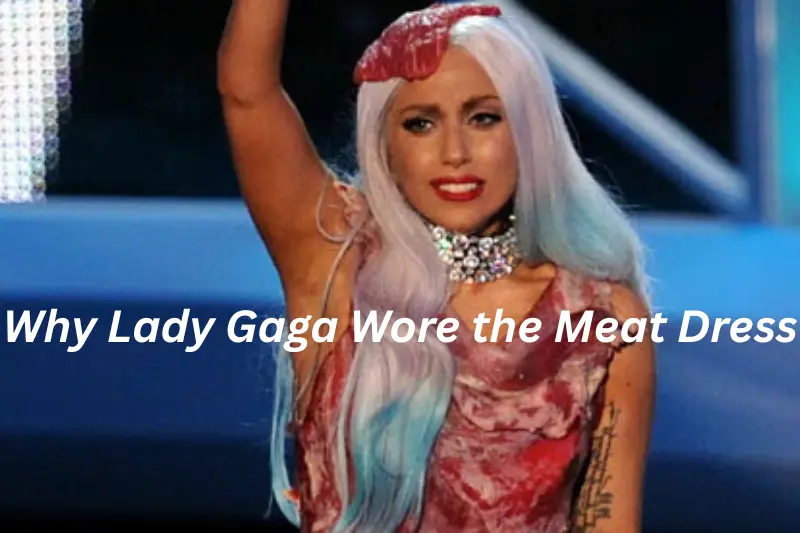
The Lady Gaga meat dress is exactly what it sounds like — a dress made entirely from raw beef. The striking outfit debuted at the 2010 MTV Video Music Awards (VMAs) and was designed by Argentinian artist Franc Fernandez with styling by Nicola Formichetti.
The sleeveless, asymmetrical dress was paired with matching beef-covered platform boots and a meat headpiece, making it one of the most memorable red-carpet looks of the decade. Beyond its shock factor, the meat dress was crafted as a deliberate piece of wearable art, meant to provoke thought and conversation about freedom, individuality, and human rights.
Why Lady Gaga Wore the Meat Dress
At first glance, Lady Gaga’s meat dress looked like a stunt designed only to shock the world. But Gaga made it clear that her choice carried a deeper political and social message.
In interviews following the 2010 MTV VMAs, Gaga explained that the dress was a protest against the U.S. military’s “Don’t Ask, Don’t Tell” policy, which at the time banned LGBTQ+ individuals from serving openly. By wearing clothing made of raw beef, she wanted to symbolize how people could be treated like “pieces of meat” if their basic human rights were denied.
The dress also tied into Gaga’s broader advocacy for individuality and freedom of expression. She wanted to challenge society to look beyond appearances and think critically about issues of equality.
In her own words, Gaga emphasized that the meat dress was not about shock alone—it was about making sure people remembered the message long after the red carpet lights faded.
Public Reaction
Lady Gaga’s meat dress set off a media firestorm as soon as she stepped onto the 2010 MTV VMA red carpet. Television networks, magazines, blogs, and social media platforms lit up with photos and opinions within minutes. For days, it was one of the most-searched and most-talked-about topics online.
- Criticism: Animal-rights organizations such as PETA condemned the outfit for using real meat, calling it disrespectful and wasteful. Some critics dismissed it as a cheap publicity stunt designed only to shock.
- Support: Many fans and commentators, however, praised Gaga for turning the red carpet into a stage for activism. They saw the dress as a bold piece of performance art that highlighted the issues she was speaking about, particularly LGBTQ+ rights and personal freedom.
The polarizing reactions only amplified the message Gaga wanted to send. By wearing something impossible to ignore, she guaranteed that conversations about equality and human rights would dominate headlines alongside the photos of her outfit.
Aftermath & Legacy
After the 2010 MTV VMAs, Lady Gaga’s meat dress didn’t just fade into pop-culture trivia — it became a museum piece. The raw beef was carefully preserved by a taxidermist, then treated to resemble jerky so it could last. In 2011, the dress was added to the Rock and Roll Hall of Fame’s “Women Who Rock” exhibit in Cleveland, Ohio, where fans can still see it on display.
The outfit’s legacy goes far beyond the glass case. Fashion critics regularly list the meat dress among the most memorable red-carpet looks of all time. It has inspired Halloween costumes, memes, parodies, and countless online think-pieces about the intersection of celebrity, art, and politics.
More importantly, the meat dress solidified Lady Gaga’s reputation as an artist willing to take risks and use her fame to spark uncomfortable but necessary conversations. Over a decade later, it’s still referenced in discussions about bold fashion statements and celebrity activism — proof that one controversial outfit can shape cultural history.
Cultural Significance
More than a decade later, the Lady Gaga meat dress remains one of the most iconic examples of how fashion can be used as social commentary. Long after the 2010 MTV VMAs, it’s still studied in articles, classrooms, and documentaries about celebrity culture, activism, and performance art.
The dress proved that a red-carpet look could do more than showcase a designer — it could spark worldwide conversations about politics, identity, and human rights. In the years since, other artists have followed Gaga’s lead by using their public appearances to highlight causes, but few have achieved the same level of impact.
It also marked a turning point in how the public sees Lady Gaga herself. No longer just a chart-topping singer, she became widely recognized as a creative force who blends art, fashion, and activism. The meat dress is now a cultural reference point for bold self-expression, risk-taking, and using fame to challenge norms.
Key Takeaways
Debut: Lady Gaga wore the meat dress at the 2010 MTV Video Music Awards.
Design: Created by artist Franc Fernandez and styled by Nicola Formichetti, it was made entirely of raw beef.
Meaning: Gaga said the outfit protested the U.S. military’s “Don’t Ask, Don’t Tell” policy and symbolized standing up for human rights.
Reaction: The dress drew worldwide attention, sparking both criticism from animal-rights groups and praise for its bold statement.
Legacy: Preserved and displayed at the Rock and Roll Hall of Fame, it remains a landmark moment in celebrity fashion and activism.
Conclusion
Lady Gaga’s meat dress was far more than a shocking outfit — it was a cultural flashpoint that blended fashion, activism, and performance art into one unforgettable moment. By stepping onto the 2010 MTV VMA red carpet draped in raw beef, Gaga challenged viewers to think about equality, individuality, and the power of self-expression.
Over a decade later, the dress still stands as a symbol of how celebrity appearances can transcend style and spark meaningful conversations. Whether you view it as art, protest, or spectacle, the Lady Gaga meat dress remains one of the most iconic and influential fashion statements in modern history.